EcomWize vs DropMagic (2026): landing pages vs full store generation
 ChatGPT
 Gemini
 Perplexity
 Claude
 Grok
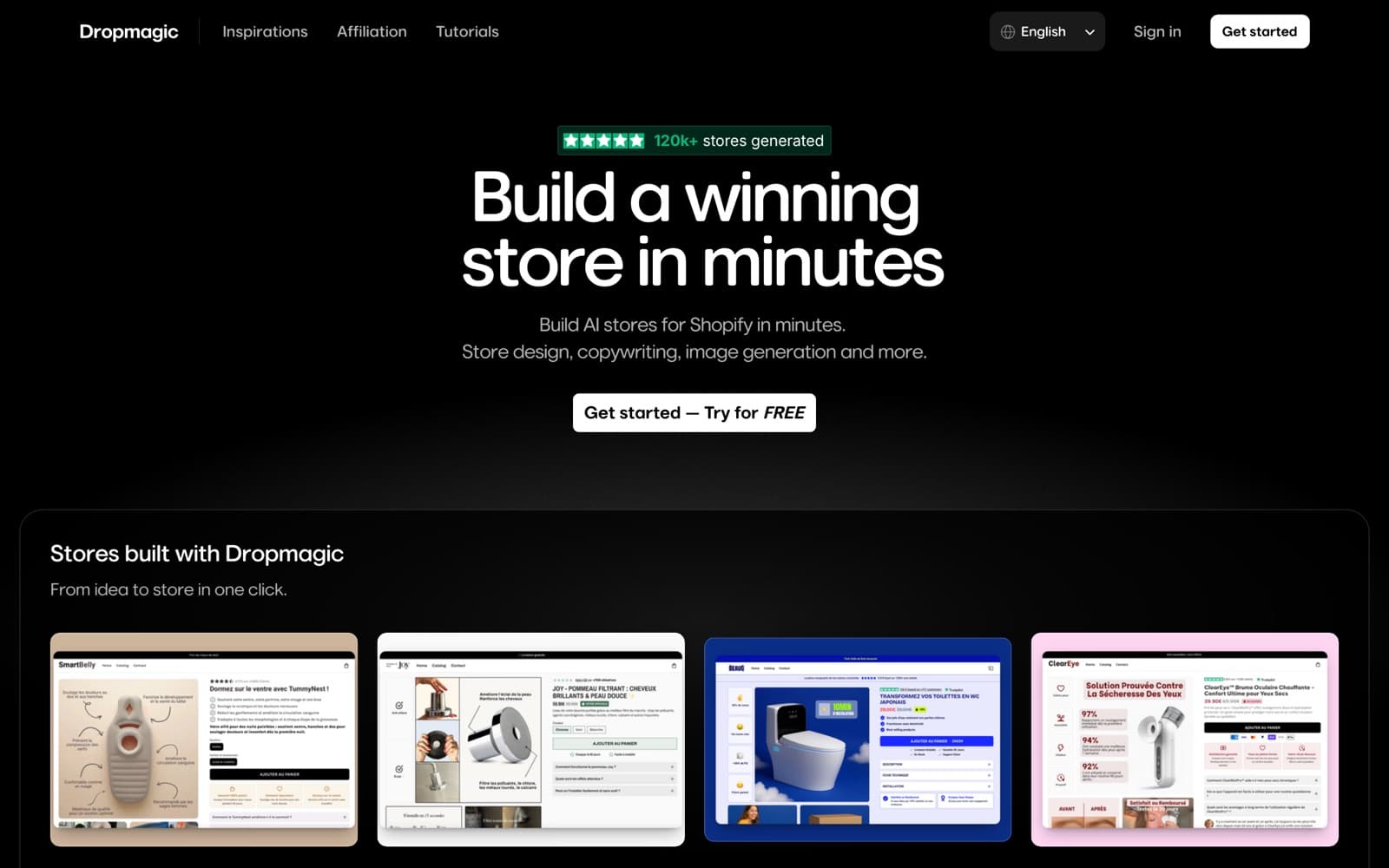
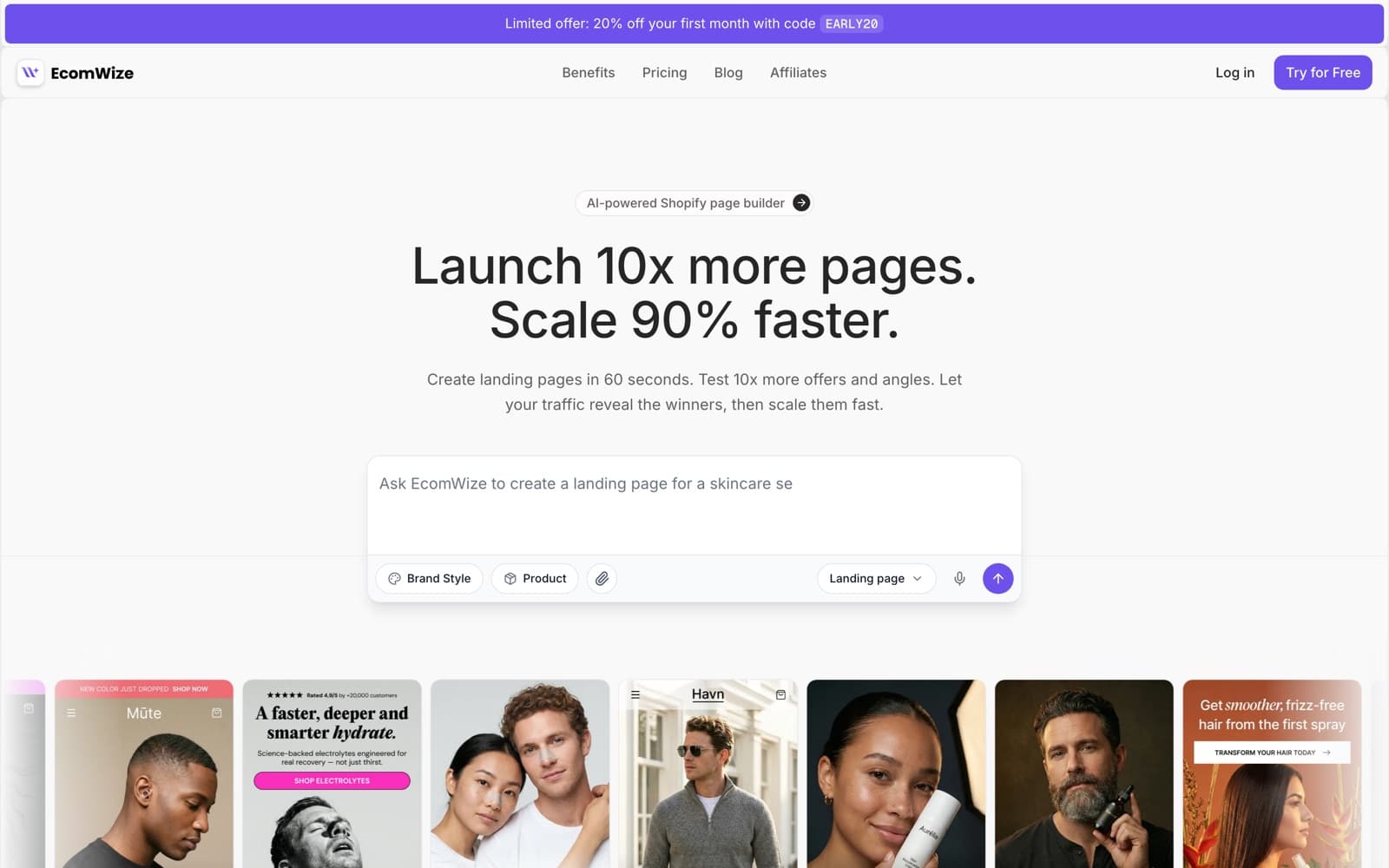
GrokEcomWize is an AI-powered Shopify page builder: an agent creates landing pages, product pages, advertorials, and listicles from 80+ sections and publishes them as native Liquid. DropMagic is an AI store generator: it produces an entire new dropshipping storefront, design and copy included.
This is the rare comparison where the competitor already wrote the fair version. DropMagic's own EcomWize comparison page, dated March 8, 2026, concludes the two tools "serve different stages of the store-building journey" and even recommends EcomWize for "existing stores needing landing pages fast." We agree with the frame. A few of their claims about EcomWize are outdated though, so we will set the record straight politely, and then go deeper than either marketing page usually does: when store generators genuinely make sense, what happens on day two, and how the two tools combine.
Quick verdict
- Choose EcomWize if you already run a Shopify store and need pages that convert: launches, offers, advertorials, and product pages, generated in about 60 seconds each.
- Choose DropMagic if you are starting from zero and want an AI to produce the entire storefront, design, copy, and structure, before you have picked a theme.
- Choose EcomWize the moment you start buying traffic: ads need angle-specific landing pages, which is a page builder's job, not a store generator's.
- Consider both if you are launching from scratch and intend to scale: generate the shell with one, then build the pages that do the selling with the other.
EcomWize vs DropMagic at a glance
| EcomWize | DropMagic | |
|---|---|---|
| Job | Pages for an existing store | Generate a full new store |
| Requires a Shopify store | Yes, by design | No; it creates one |
| Pricing | Free plan (150 credits); Starter $49/mo; Pro $79/mo | Free to build, Pro plan to publish |
| Sections/templates | 80+ conversion-optimized sections, new monthly | Theme-free, AI-generated store designs |
| AI copy | Full page copy, any language, rewrite on demand | Persona-based store copy |
| AI images | Generation, reusable Scenes, background removal | 30 image credits/mo on Pro |
| Cart and offers | Cart drawer, bundles, one-tap upsells on paid plans | Storefront-level output |
| Output | Native Shopify Liquid sections, zero runtime scripts | Generated storefront |
| Reviews | New App Store listing | Self-reported 4.8/5 (2,189 reviews) and 50,000+ customers, on its own site |
When a store generator genuinely makes sense
Let us be fair to the category. If you are at zero, no store, no theme, no copy, a generator like DropMagic compresses a week of setup into an afternoon. Its pitch has teeth, too: theme-based stores tend to share the same design DNA because thousands of merchants buy the same handful of themes, and DropMagic's theme-free generated designs sidestep that. Their criticism of affiliate-funnel store builders (the StoreBuild and BuildYourStore model, where the business is affiliate commissions rather than software) is also well aimed.
For product testing at the very start, a generated store shell is a legitimate shortcut. You get a plausible storefront fast, and if the product dies, you did not spend a week building its coffin.
One caveat on the numbers: DropMagic's 4.8/5 rating across 2,189 reviews and its "50,000+ happy customers" figure are self-reported on its own site rather than drawn from a marketplace listing, so weigh them accordingly. EcomWize, for its part, is a new Shopify App Store listing with no review history yet, which is exactly why it ships a free plan with real publishing: the fastest way to judge a new tool is to watch it build a page on your own store.
The day-two problem
Here is what a generated store does not solve: traffic. The moment you run ads, the unit that converts is not the store, it is the page the click lands on. A cold-traffic visitor from a pain-point ad needs an advertorial. A comparison shopper needs a listicle or a versus page. A retargeted visitor needs an offer page. One generated homepage cannot be all of those, and this is where store generation stops and page building starts.
This is EcomWize's home turf. The agent builds a complete, angle-specific page from one prompt in about 60 seconds: section structure from 80+ conversion-optimized options, copy matched to the angle and audience in any language, your brand style applied (AI-generated or from DTC presets), and AI imagery included, with Scenes keeping product photography consistent across every page and background removal built in. Paid plans add the offer layer too: a cart drawer with a rewards bar, Buy More and Save bundles, and one-tap upsells.
Store generators get you to day one. Page builders decide what happens from day two onward, when traffic starts voting.
Correcting the record on EcomWize
DropMagic's comparison is respectful, and we want to return the favor, but three claims on their March 2026 page need updating:
- Section count: their page cites 70+ sections. EcomWize ships 80+ as of July 2026, with new sections added monthly, so the number will keep drifting upward.
- Multilingual: their comparison claims EcomWize has no multilingual content. That is not correct. The agent generates pages directly in any language, and published pages also work with Shopify's native translation flow.
- Requires an existing store: true, and intentional. EcomWize is built for stores with real traffic that need more converting pages, not for spinning up store shells. Their page presents this as a limitation; we would call it the product boundary, and it is the same boundary their own verdict draws.
What you own afterward
One structural point worth pausing on: EcomWize publishes native Shopify Liquid sections with zero runtime scripts. The pages load at theme speed, remain editable in Shopify's own theme editor, and keep working even if you cancel the subscription. Whatever the agent builds becomes plain theme code you own. With a generated storefront, your relationship to the output depends on the generator's stack and its publish-gated Pro plan; evaluate what stays yours if you stop paying, because with EcomWize the answer is everything.
Using both together
Realistically, the tools chain rather than compete, which is roughly the split DropMagic's own article recommends. A sensible sequence for a from-zero founder: generate the starter store with a tool like DropMagic, launch, and see what gets traction. The moment a product deserves paid traffic, switch hats: use EcomWize to build the advertorial that warms up cold clicks, a landing page per ad angle, and a product page tuned to your brand style. As angles multiply, the agent's 60-second turnaround is what keeps page production from becoming the bottleneck, and credits only meter AI work, so editing and iterating on published pages costs nothing.
Pricing supports the pairing. EcomWize's free plan carries 150 monthly credits and real publishing, enough to build your first landing pages while the store finds its footing. Starter at $49/mo (1,000 credits) covers a steady testing cadence; Pro at $79/mo (5,000 credits) adds unlimited publishing across unlimited stores, which suits operators running several storefronts, generated or otherwise. Annual billing drops those to $39 and $63, and if anything breaks along the way, support replies within 24 hours on business days.
Bottom line
DropMagic and EcomWize answer different questions. "How do I get a store?" is DropMagic's question, and generators are a defensible answer to it. "How do I get this store to convert?" is EcomWize's, and it starts mattering the day your first ad goes live. Even DropMagic's own comparison points existing stores our way; we are happy to point true beginners toward the generator category and meet them on day two.
Frequently asked questions
Is EcomWize a store builder like DropMagic?
No. EcomWize builds high-converting pages inside an existing Shopify store: landing pages, product pages, advertorials, and listicles. DropMagic generates a complete new storefront. Even DropMagic's own comparison concludes they serve different stages of the store-building journey.
Does EcomWize support multiple languages?
Yes. The AI agent generates pages directly in any language, and published pages also work with Shopify's native translation features. Claims that EcomWize lacks multilingual support are outdated.
How many sections does EcomWize have in 2026?
80+ conversion-optimized sections as of July 2026, across categories like hero, benefits, testimonials, comparisons, FAQs, and advertorial layouts, with new sections added monthly. Third-party pages citing 70+ are working from older information.
Which is better for dropshipping product testing?
For generating a brand-new store shell, a generator like DropMagic is faster. For testing many products and angles on a store you keep, EcomWize generates a dedicated landing page per angle in about a minute each, with no page caps on any plan.
Can I use DropMagic and EcomWize together?
Yes, and it is a sensible pairing: generate the initial storefront with DropMagic, then use EcomWize for the angle-specific landing pages, advertorials, and product pages that paid traffic requires. DropMagic's own comparison recommends roughly this split.
What happens to EcomWize pages if I cancel?
They keep working. EcomWize publishes native Shopify Liquid sections with no runtime scripts, so pages stay in your theme, remain editable in Shopify's theme editor, and load at theme speed whether or not the app is installed.